Manta lands more tuna than any other port on Ecuador’s coast. That single fact shapes everything you will eat here: the fish arrives at dawn, the prices are lower than anywhere inland, and the local cooking is built around what the boats bring in rather than what a menu decided in advance. So if you’re wondering where to eat in Manta Ecuador, the answer starts at the waterfront – but it doesn’t end there.
This is a practical guide to eating in Manta — what the dishes are, when to eat them, and roughly what you should be paying so you know when you are being charged a tourist price.
Eat ceviche in the morning, not at night
The single most useful thing a visitor can know: on the Ecuadorian coast, ceviche is breakfast food. Locals eat it between 08:00 and 11:00, when the fish came in a few hours earlier. By evening, what is being served has been sitting since morning.
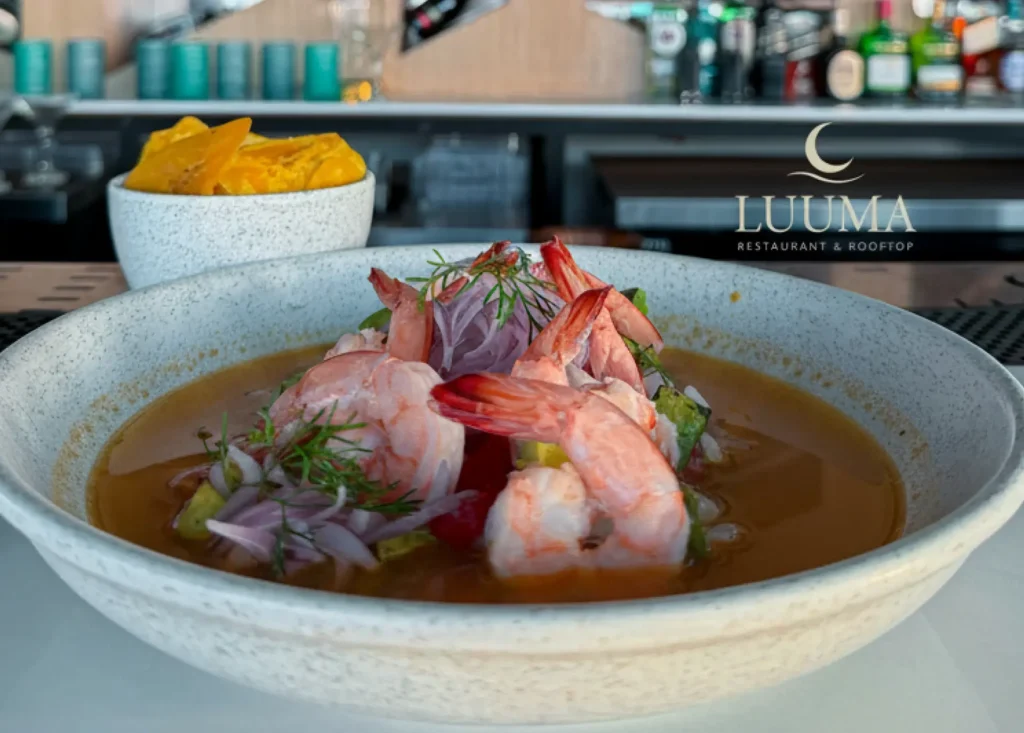
Ecuadorian ceviche is also not Peruvian ceviche. The fish is cured in lime but served in its own juice with onion, tomato and coriander, and it comes with popcorn and toasted maize on the side. Shrimp ceviche is usually cooked, not raw. Expect to pay $6 to $9 at a proper cevichería.
The dishes that are actually from here
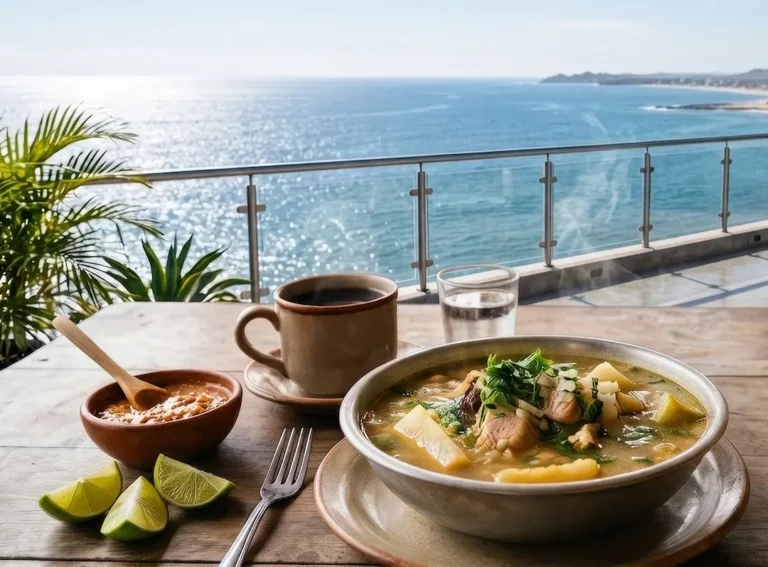
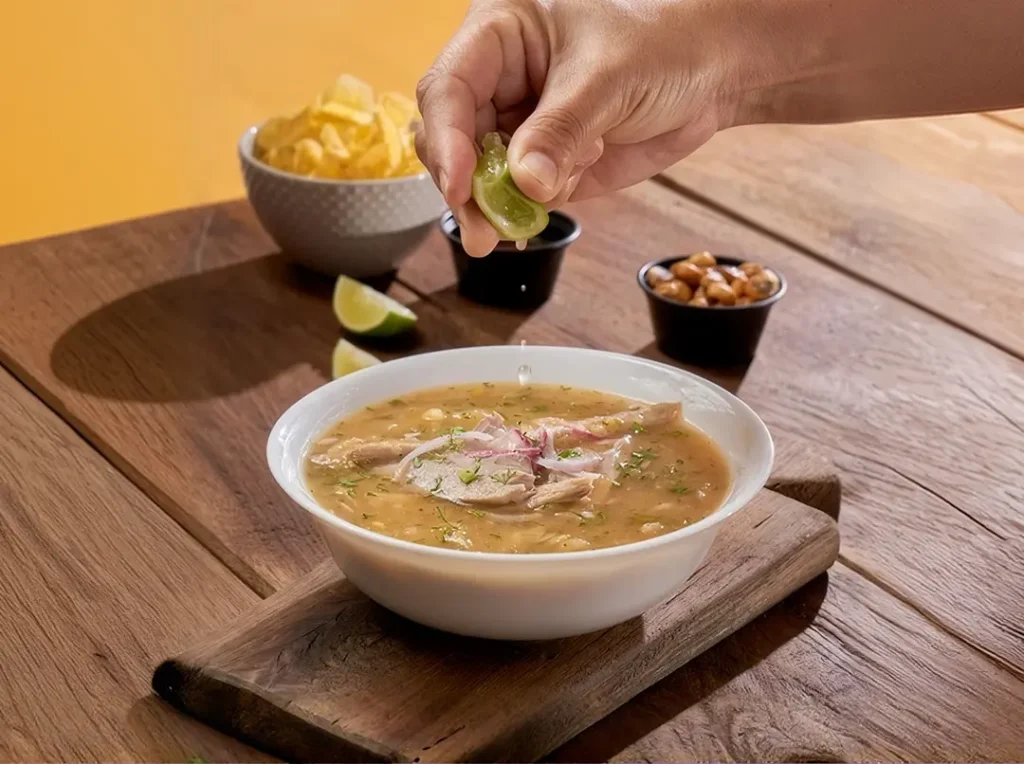
- Viche. A peanut-based seafood soup with green plantain — the defining dish of Manabí province. Creamy, substantial, nothing like it elsewhere in Ecuador. Around $9 to $11.
- Tonga. Chicken and rice wrapped and steamed in a banana leaf, with peanut sauce. Traditionally what field workers carried for lunch.
- Corviche. A fried green-plantain fritter stuffed with fish. Street food, $1 to $2, and one of the best things in the province.
- Encebollado. Tuna soup with yuca and pickled onion. Nationally the hangover cure, and Manta makes a strong case for the best version.
- Sal prieta. Not a dish but a condiment — ground peanut, maize and achiote. It goes on everything and you will want to take some home.
Where to go, by situation
The fish market at dawn
The Playita Mía market is where the boats unload. Go before 09:00 if you want to see it working. Several stalls will cook what you point at. This is the cheapest and freshest seafood in the city and the least comfortable setting — plastic chairs, concrete floor, no English spoken.
Lunch like a local
Almuerzo is the Ecuadorian set lunch: soup, a main, juice, sometimes dessert, served from around 11:00 to 15:00 for $4 to $9 depending on the neighbourhood. It is the best value meal in the country. Ours runs $8,50 for grilled chicken and $8,90 for wahoo or albacora with rice and salad — the lunch menu has the full list.
Dinner with a view
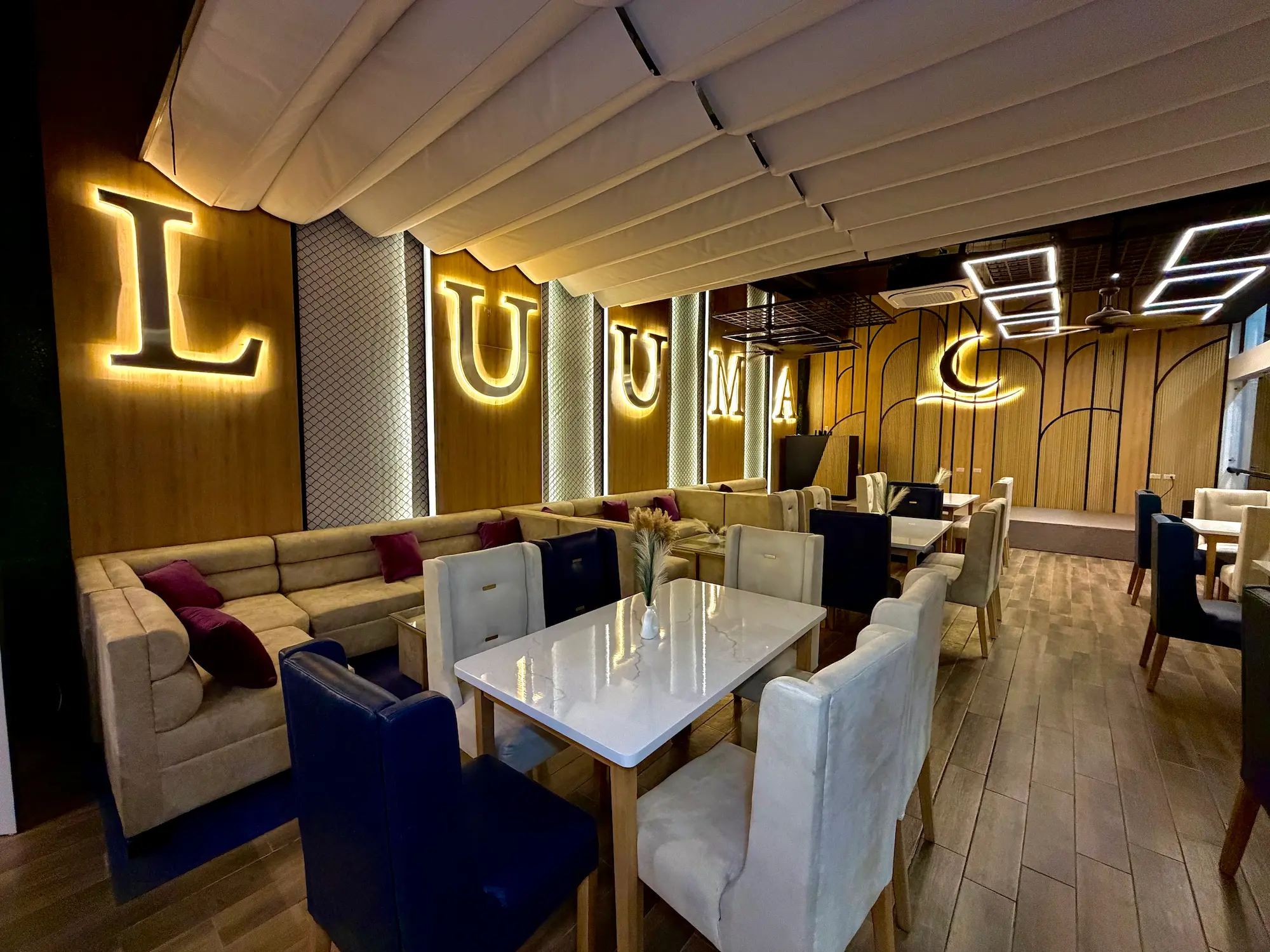
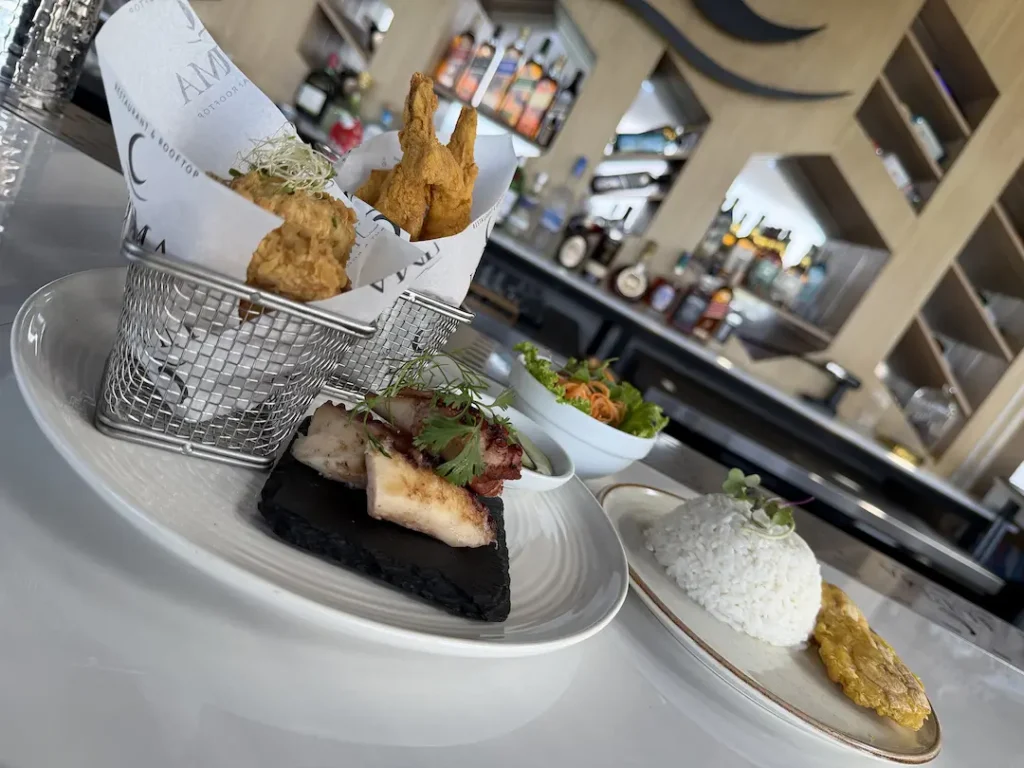
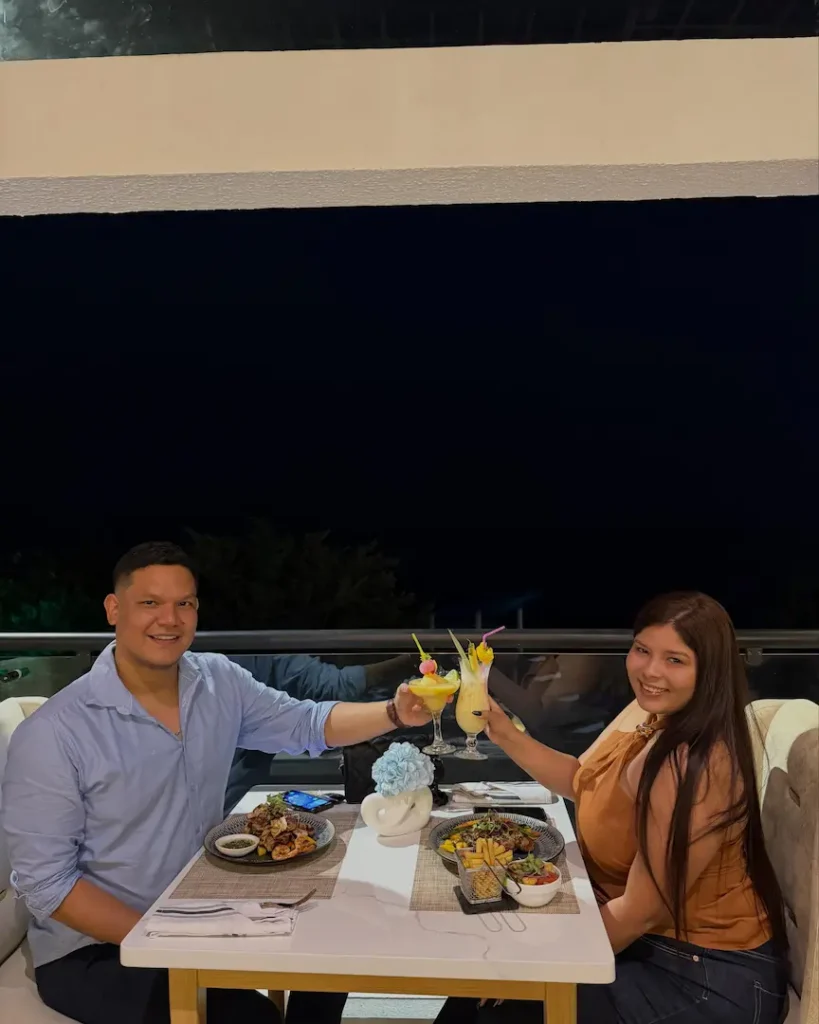
La Quadra is the restaurant district, five minutes from Playa Murciélago, and where most sit-down dinner options cluster. Prices climb here — mains $12 to $22 — and so does the comfort level. This is where you go for the sunset rather than the bargain.
What things should cost
| Meal | Local price | Tourist-zone price |
|---|---|---|
| Ceviche | $6 – $9 | $10 – $14 |
| Set lunch (almuerzo) | $4 – $6 | $8 – $10 |
| Corviche (street) | $1 – $2 | $2 – $3 |
| Grilled fish main | $8 – $11 | $13 – $18 |
| Beef cut, restaurant | — | $17 – $22 |
| Cocktail | — | $8,50 – $13,60 |
Neither column is a rip-off. You are paying for a chair, a view and a bathroom in the right-hand one. Just know which you are choosing.
Visitors always ask where the tourist food is. There isn’t any, really. What we serve upstairs is the same viche your grandmother in Portoviejo makes, we just put it on a nicer plate and you can see the ocean while you eat it.
Equipo de Luuma Rooftop
Why the fish is genuinely better here
This is not marketing. Manta is the largest tuna port on the Pacific coast of South America, and the industrial fleet that supplies canneries worldwide unloads in the same bay as the artisanal boats that supply the city. The result is that restaurants here buy from a market that receives fish twice a day rather than from a distributor that receives it twice a week.
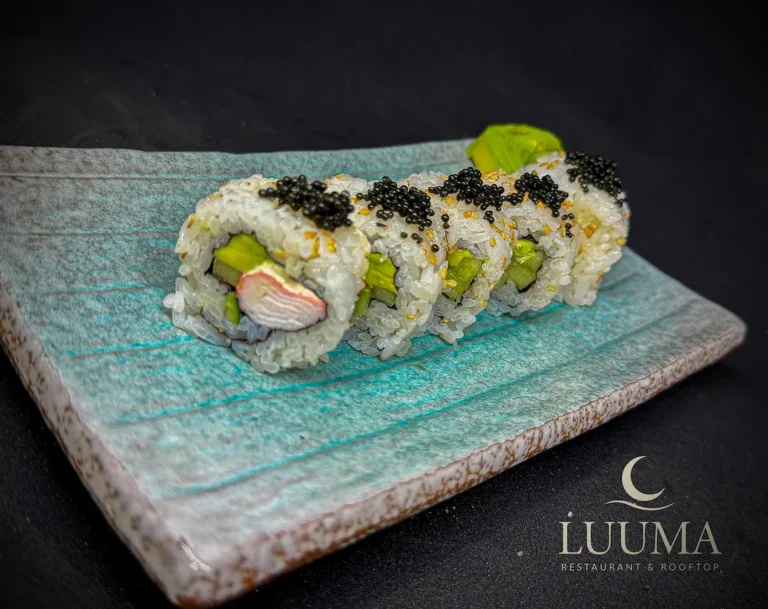
The practical effect is on the cuts you will not see inland. Wahoo and albacora appear on menus in Manta as everyday grilled fish at $8,90; in Quito the same species are priced as specialities when they appear at all. Red tuna served raw — as tartare or with avocado — costs $11,50 to $12,60 here, which is roughly half what the equivalent plate runs in the capital.
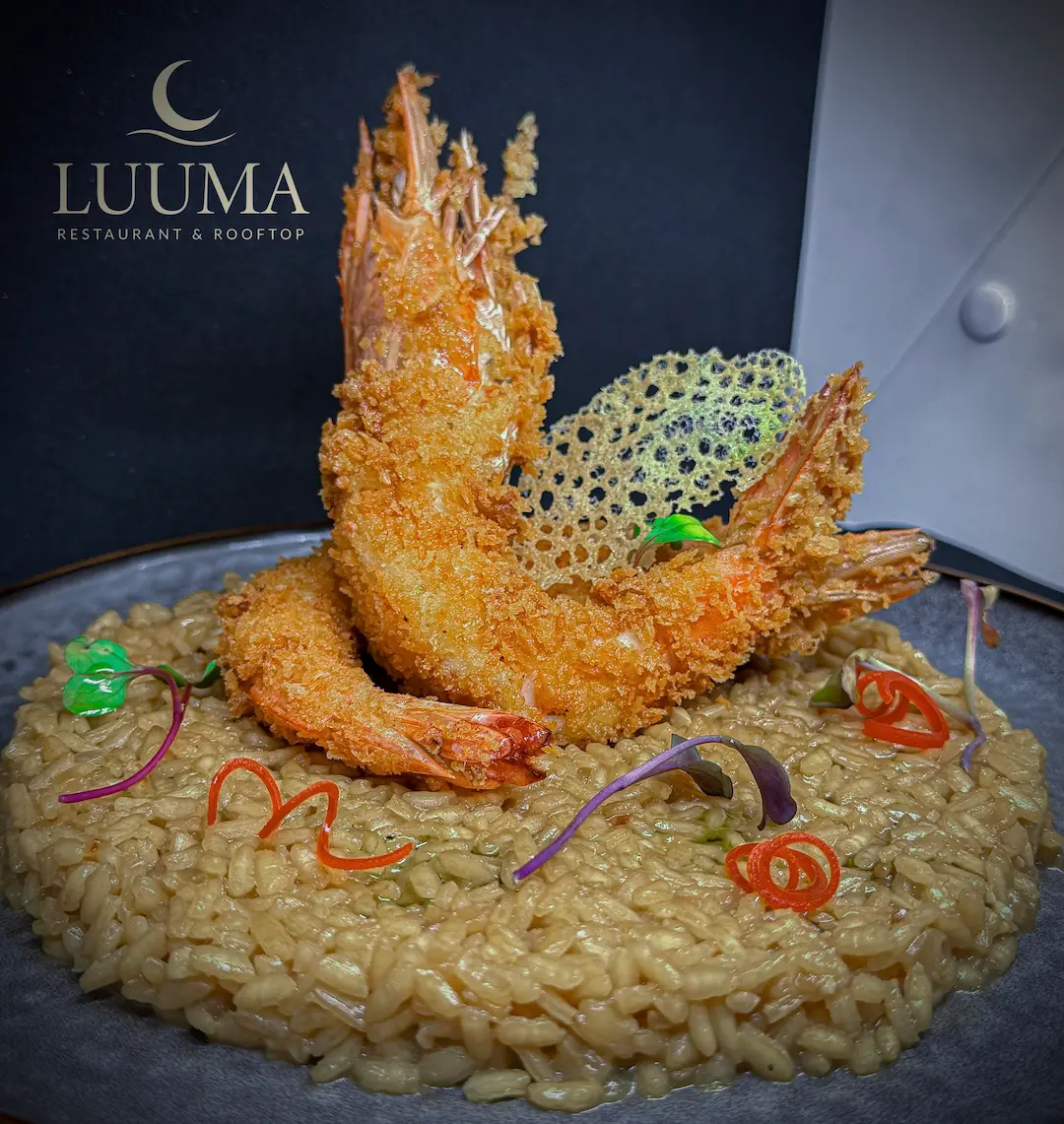
That is also why the evening menu leans on fish rather than imported product. It would be strange to do otherwise in a port.
What to avoid
- Ceviche after dark in a quiet place. Not dangerous, just past its moment. Go where there is turnover.
- Anything advertised as ‘Peruvian ceviche’ on the beach. Ecuador has its own version and it is better here than an imitation of someone else’s.
- Lobster in low season. There is a closed season for a reason. If it is on the menu year-round, ask where it came from.
- The first place on the beach with someone outside inviting you in. Universal rule, and it holds in Manta.
Practical notes
- Currency. Ecuador uses the US dollar. Bring small bills — nobody at a market can break a $50.
- Service charge. 10 % is added by law. Additional tipping is optional.
- Tap water. Do not drink it. Bottled water is cheap and everywhere.
- Timing. Kitchens on the coast close earlier than you expect. By 22:00 many are done.
- Sunday. The city empties toward the beach and many places close. Plan around it.
A day of eating in Manta
- 08:30 — ceviche or encebollado near the market, with the fishing boats still unloading.
- 13:00 — an almuerzo somewhere inland from the beach, where the price drops.
- 16:00 — corviche or a bolón from a street cart, to hold you until dinner.
- 17:45 — up to a rooftop in La Quadra for sunset, which happens around 18:15 all year.
- 20:00 — dinner. Grilled fish if you have been eating meat, a beef cut if you have been eating fish all week.
Preguntas frecuentes
Is the seafood safe to eat raw?
Ceviche in Ecuador is cured in lime rather than served fully raw, and shrimp is usually cooked. In a working port like Manta the turnover is high. The standard advice applies: eat it in the morning and at busy places.
Do people speak English in Manta?
In hotels and the restaurant district, some. At the market and in local comedores, very little. A translation app and a smile go a long way.
Is Manta walkable?
The beach and La Quadra areas are. Everything else needs a taxi, which is inexpensive — most trips inside the city are $2 to $4.
When is the best season?
June to September is dry and cooler, and whale-watching season. January to April is hotter with afternoon rain but the sea is warmer.
Coming to Manta and want a table for sunset? Write to us on WhatsApp with your date and party size.