Ask an Ecuadorian from anywhere in the country where the best food is and a surprising number will say Manabí, the coastal province where Manta sits. It is one of the few things people from Quito and Guayaquil agree on.
The reason is peanut. Manabí cooking is built on ground peanut, green plantain and whatever came off the boats that morning, and it tastes like nowhere else in South America. Here is what to order and what it actually is.
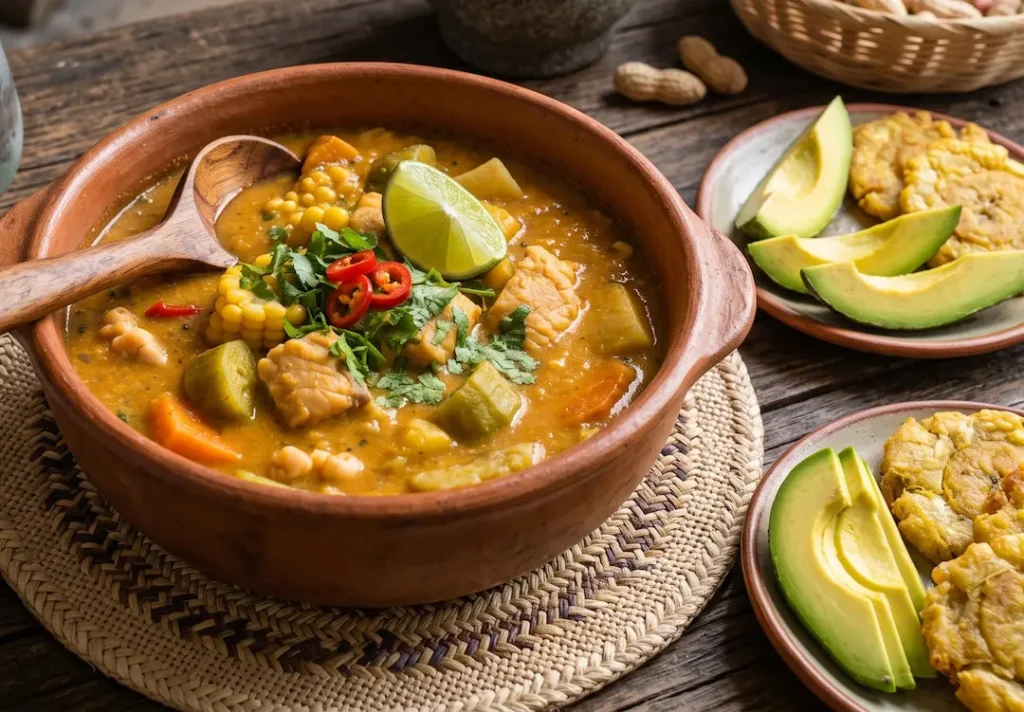
Viche — the dish that defines the province
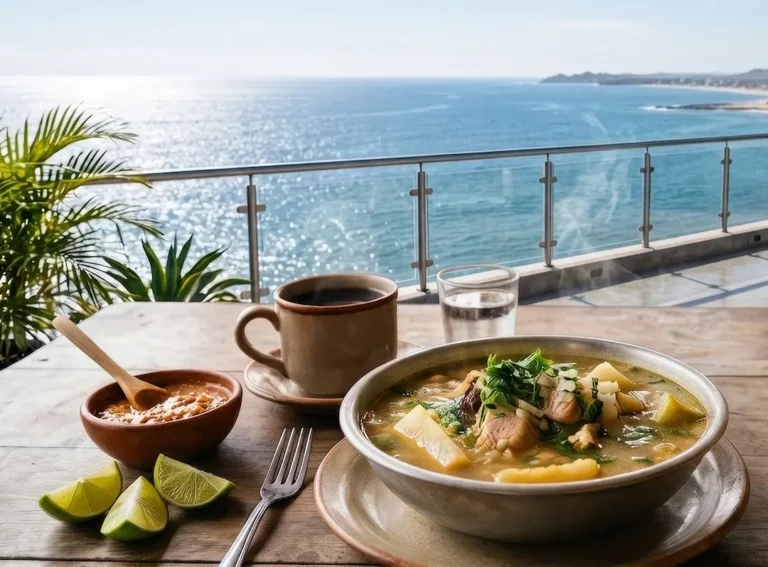
A thick soup of fish or seafood in a broth of ground peanut, with green plantain, yuca, corn and peanut dumplings. It is creamy without any dairy in it, savoury, and substantial enough to be a whole meal.
Viche is to Manabí what a chowder is to New England: everyone makes it, everyone’s grandmother makes it best, and the argument never ends. Mixed viche with shrimp and fish runs around $9,80. If you eat one thing from this list, make it this.
Tonga — lunch in a leaf
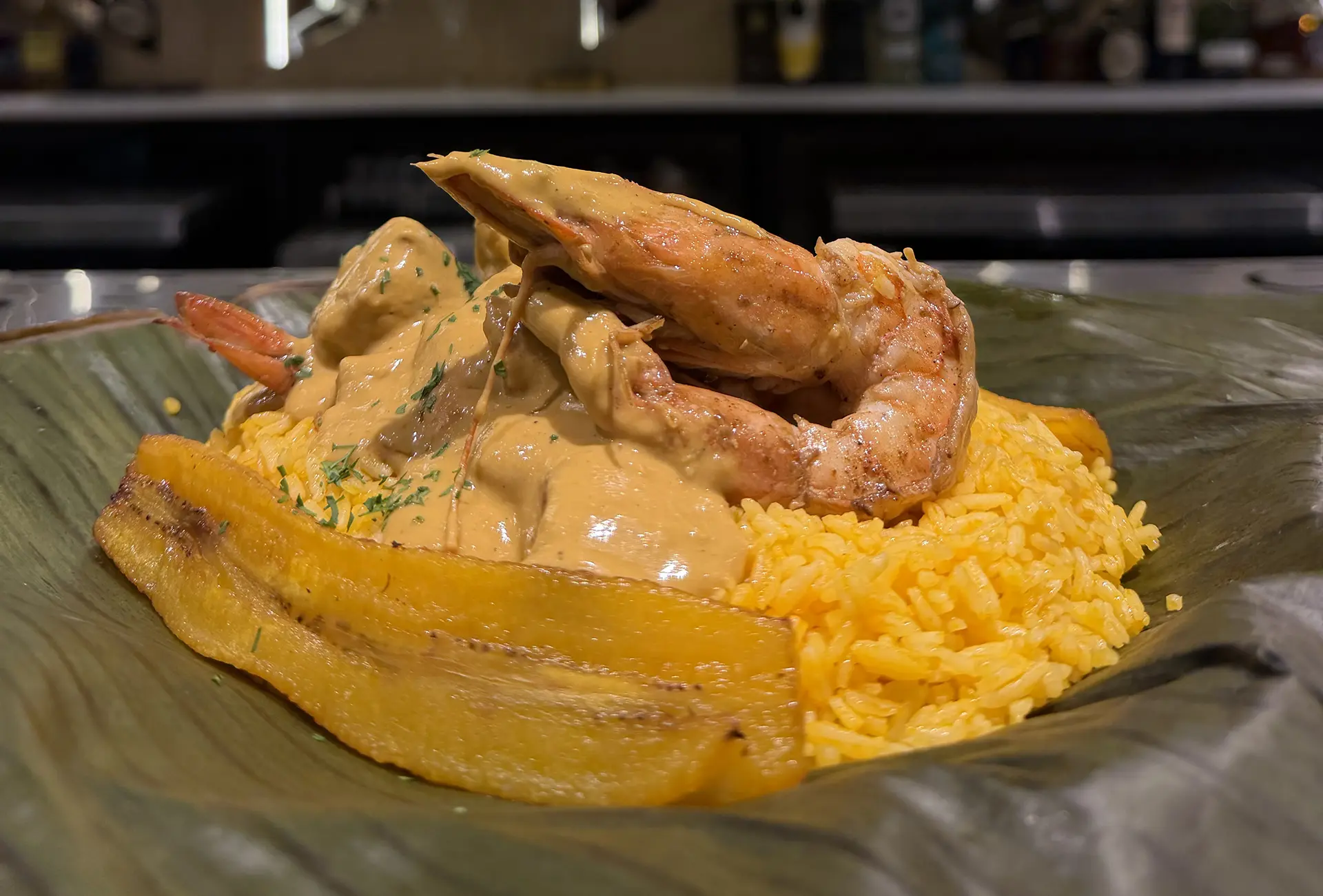
Chicken and rice with peanut sauce, wrapped in a banana leaf and steamed. It originated as the meal field workers carried to the plantation, which is why it travels well and holds heat for hours.
The leaf is not decoration. It perfumes the rice while it steams, and the dish tastes noticeably different cooked any other way.
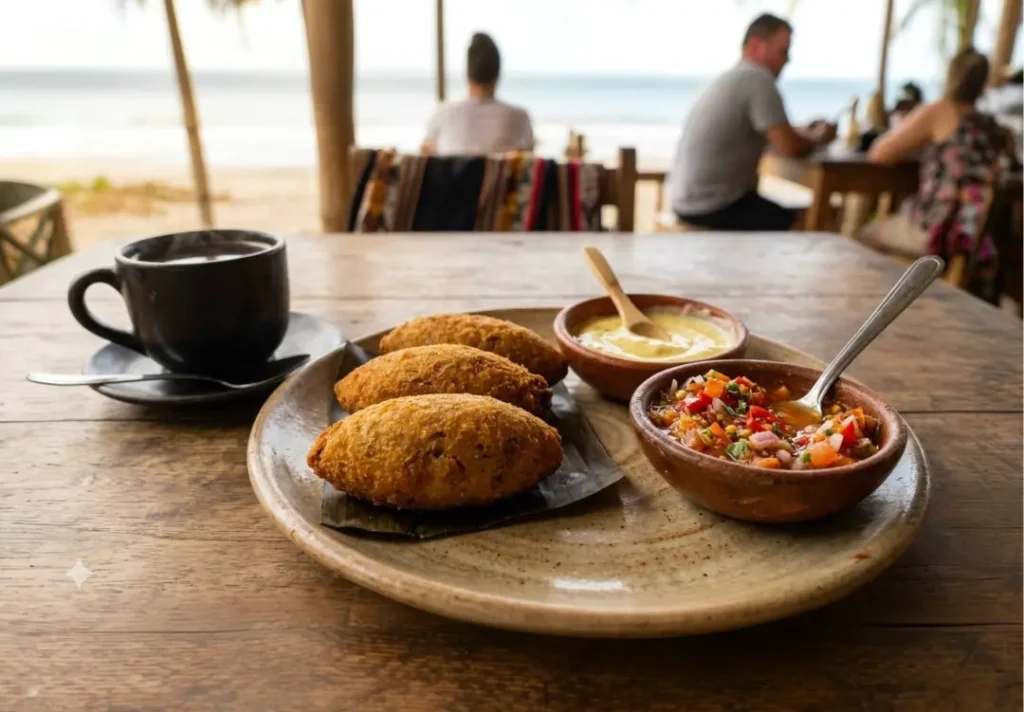
Corviche — the best dollar you will spend
A fritter of mashed green plantain stuffed with seasoned fish, deep fried until the outside cracks. Street food, $1 to $2, sold from carts and small windows all over Manta.
Order it with sal prieta on top. If you only try one street food in Ecuador, this is a better choice than anything you will be sold in Quito.
Sal prieta — the condiment you will take home
Ground toasted peanut, toasted maize, achiote and cumin, mixed into a coarse powder. It goes on plantain, on fish, on rice, on everything. Every family has a slightly different ratio and every one of them will tell you theirs is correct.
You can buy it in bags at any market for a couple of dollars, and it survives the flight home better than anything else on this list.
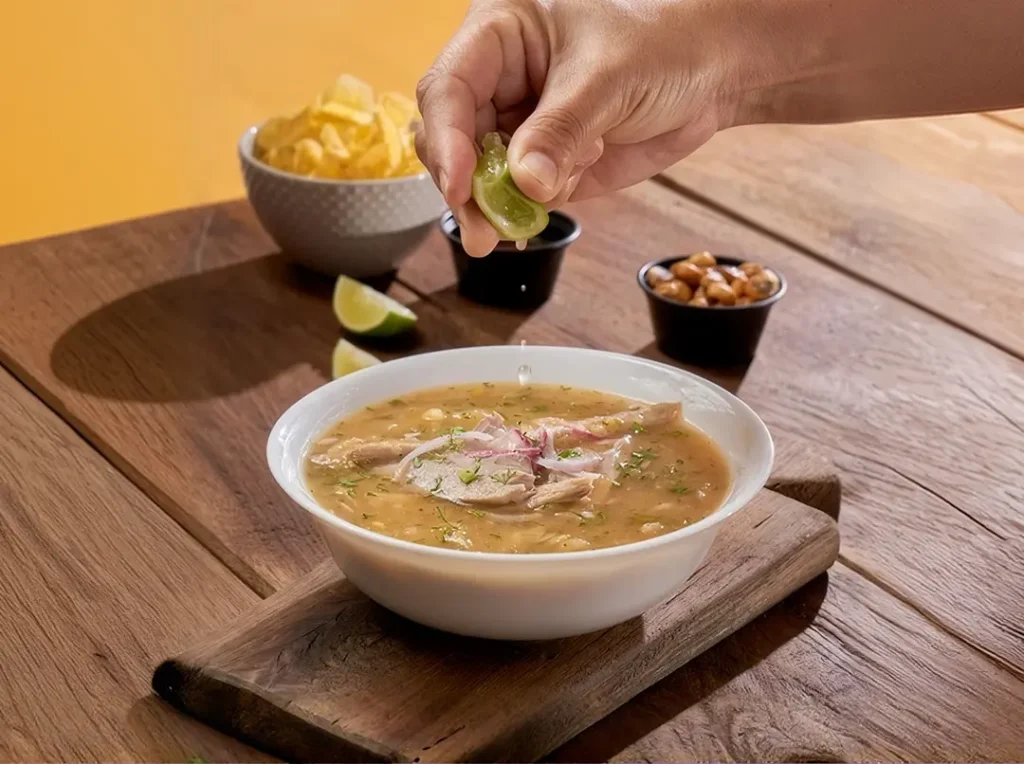
Encebollado — the national hangover cure
Tuna, yuca and pickled red onion in a cumin broth, topped with more onion and eaten with plantain chips. Ecuador’s most beloved breakfast, and Manta makes a strong claim to the best version because the tuna is landed a few hundred metres away.
Eaten from about seven in the morning. By afternoon the good places have run out.
Ceviche — and how it differs from Peru’s
Ecuadorian ceviche is served in its own juice rather than drained, which makes it closer to a cold soup than a salad. Shrimp ceviche is cooked, not raw. It comes with popcorn and toasted maize on the side, both of which go in the bowl.
It is breakfast and mid-morning food on this coast, $6 to $9 at a proper cevichería. Ordering it at nine at night marks you as a visitor.
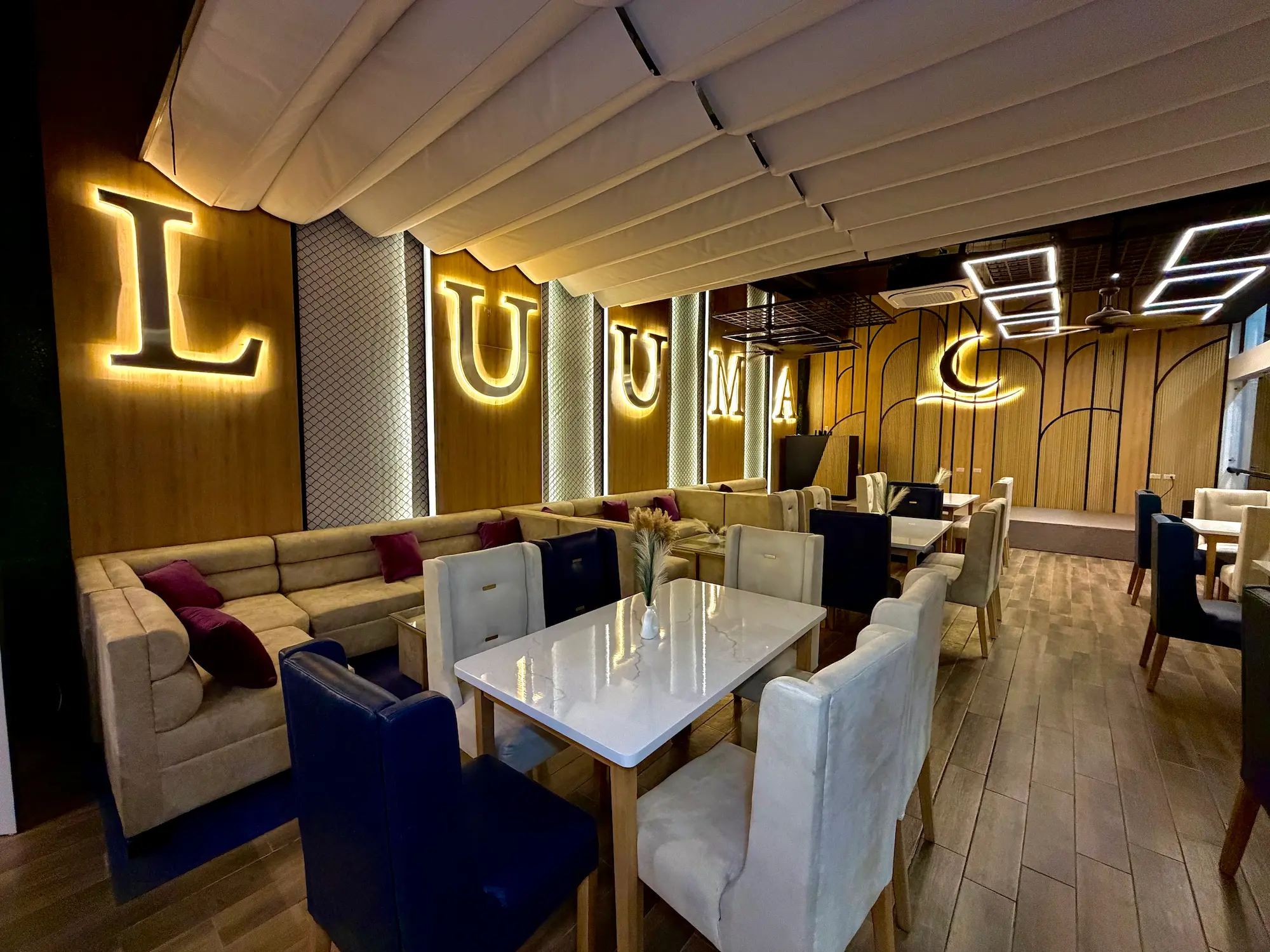
Guests are surprised that we serve viche and tonga upstairs, as if a rooftop should only do imported food. It is the opposite. If you come to Manabi and eat pasta, you wasted the trip.
Equipo de Luuma Rooftop
The rest of the list
- Bolón de verde. A ball of mashed green plantain with cheese or pork, fried. Breakfast, about $3.
- Cazuela. Fish or seafood baked in a clay bowl with plantain and peanut. Close cousin of viche, thicker.
- Guatita. Tripe in peanut sauce. Divisive, cheap and genuinely good if you are not squeamish.
- Seco de chivo. Slow-cooked goat with rice. Not coastal originally, but everywhere on this coast now.
What a meal costs
| Dish | Where | Price |
|---|---|---|
| Corviche | Street cart | $1 – $2 |
| Encebollado | Market or comedor | $3 – $5 |
| Ceviche | Cevichería | $6 – $9 |
| Almuerzo (set lunch) | Local comedor | $4 – $6 |
| Viche | Restaurant | $9 – $11 |
| Grilled fish, restaurant | Restaurant | $8,90 – $13 |
| Beef cut, restaurant | Restaurant | $17,60 – $21,95 |
Our own kitchen serves the criollo dishes from 11:00 and the evening menu from 16:00 — mixed viche is $9,80 and the grilled catch of the day is $8,90 on the lunch menu.
What to drink with it
Ecuador is not a wine country and importing it is expensive, so a bottle in a restaurant starts around $30. Beer is the everyday choice — a local one runs about $6 in a restaurant, imported $8 to $10.
The non-alcoholic options are better than the wine list. Fresh juices are everywhere and cost $2 to $3: maracuyá (passion fruit), naranjilla, tree tomato, guanábana. Ordering a juice you cannot identify is one of the better decisions available on this coast.
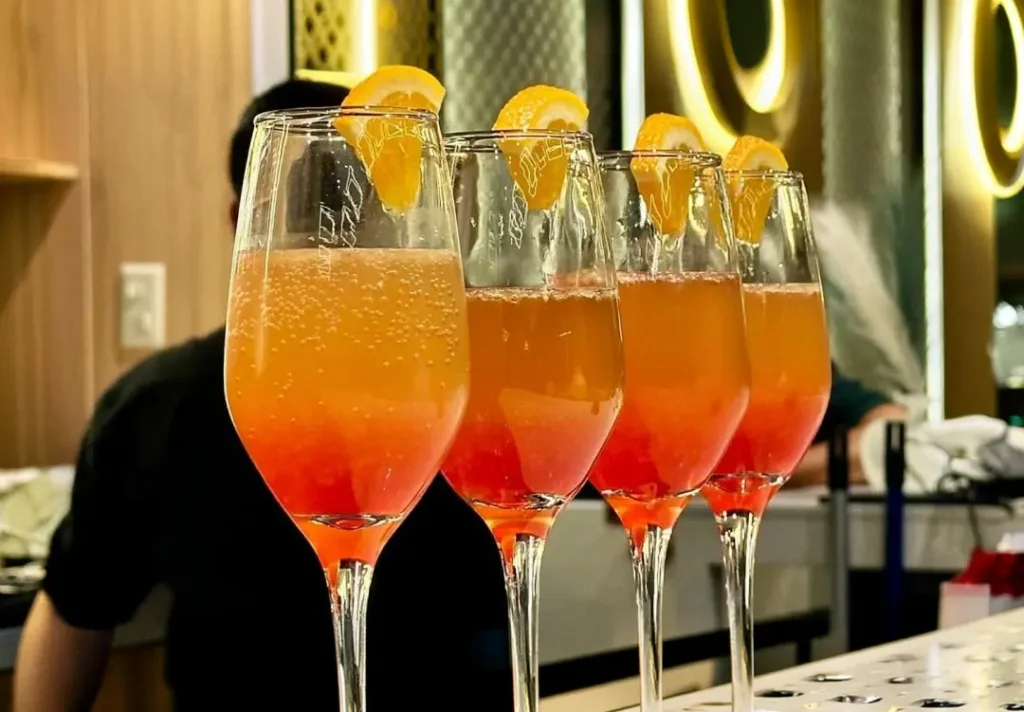
For cocktails, anything with passion fruit is the local move. A caipirinha with maracuyá or guava runs $9,95 and works far better with seafood than the classic version.
The market, and why to go
It’s worth spending an hour at the Playita Mía fish market in Manta, even if you don’t intend to buy anything. The boats arrive at dawn, the auction is conducted with shouts in Spanish, and at several stalls they’ll prepare whatever you ask for for just a few dollars.
It is also where you understand the pricing. Seeing a whole wahoo change hands for what a restaurant charges for one fillet explains the entire economics of eating on this coast.
Two rules for eating well here
First: eat seafood in the morning and meat at night. The fish that arrived at dawn is at its best before noon, and every local eats accordingly.
Second: if a menu is translated into four languages and has photographs, you are in a tourist place and paying for it. The comedores that locals use rarely have a written menu at all — someone tells you what there is.
Preguntas frecuentes
Is Manabí food spicy?
No. Ecuadorian cooking is savoury rather than hot. Chilli comes separately as ají, a sauce on the table, so you control it.
Can vegetarians eat well here?
It takes effort. The peanut base of most dishes is vegetarian but they are almost always built around fish or chicken. Menestra with rice, bolón with cheese and salads are the reliable options.
What should I bring home?
Sal prieta, and cocoa. Ecuador grows some of the best cacao in the world and it costs a fraction of what it does abroad.
Is street food safe?
Generally yes, at busy carts with high turnover. Corviche and bolón are fried to order, which helps. Avoid anything that has been sitting warm.
Want to try the Manabí dishes with a view of the Pacific? Write to us on WhatsApp and we will save you a table.